
By Joshua McKinney
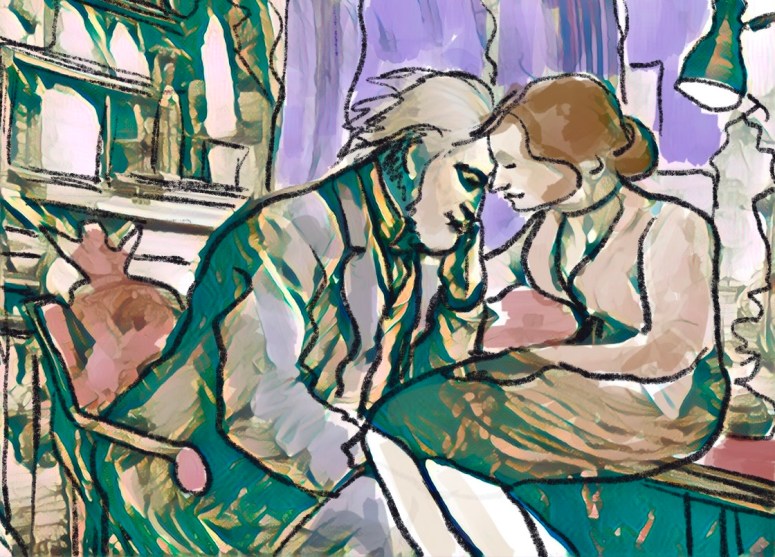
He could not remember how it began. Perhaps it was his forgetfulness, the way he would read the same poem over and over and then exclaim, “I didn’t see that coming!” Maybe it was because he had taken to staring out the window during storms, watching the rain weep down the pane and claiming he could read his name written in the wrinkling water. They told him he had done this, but he could not remember. Nor could he remember when his family had begun to conspire, but when his wife told him an agent had called inquiring about his new manuscript, he knew he had to play along. His daughter, whom he had begun to call Emily, found one of his poems on his desk, copied it, printed it, trimmed it to size, and pasted it in a copy of The New Yorker, which she left open on the coffee table. She even matched the font. His son, whom he addressed as Percy, or sometimes Gerard, handed him a twenty dollar bill and said, “Here, Dad, I cashed your royalty check for you.” So frequent and inventive were their gestures that he found his vigor renewed. He could not remember when he had written with such zeal. He rose early to write, and he retired early to ensure he was rested. He needed rest because in addition to the long hours of writing, his wife had grown uncharacteristically amorous. If they happened to pass in the hallway, she would press herself against him and whisper, “Aren’t you Mr. ________, the poet? I love your work.” Each afternoon he would hear a soft knock at his study door, and she would enter, sometimes wearing some satin, slinky thing, but most days wearing nothing at all. And each evening when she called him to dinner he found the entire family seated at the table, and while they ate they asked him about his work, posing thoughtful questions about specific poems—which they had clearly read—and nodding intently at his answers. It was this act he appreciated most, knowing how difficult it must have been for them. He nearly wept at his good fortune. To be so loved!
Joshua McKinney’s fifth book of poetry, Sad Animal, won the John Redland Poetry Prize from Gunpowder Press. His work has appeared in such journals as Boulevard, Denver Quarterly, Kenyon Review, New American Writing, and many others. He is the recipient of The Dorothy Brunsman Poetry Prize, The Dickinson Prize, The Pavement Saw Chapbook Prize, and a Gertrude Stein Award for Innovative Writing. He is co-editor of the online ecopoetics zine, Clade Song.
 MoonPark Review